I’ve written previously about an injury I sustained back in 2021. Funnily enough, I tore my Achilles tendon in my other leg two years later, also playing pickup basketball (my theory is that I have some sort of genetic predisposition to these injuries), and boy, was that challenging to accept. Sustaining two major injuries by the age of 25 had me seriously contemplating what I knew to be true about my body. While navigating injuries and studying medicine, I developed a nascent interest in fitness and nutrition. Which brings me to the topic of this piece, one that simultaneously makes me excited and trepidatious: wellness. Multiple major news outlets are covering wellness these days, and I think it’s for good reason. Many of us want to live healthy, happy lives and do our part to ward off preventable disease.
If you’ve been paying attention to the wellness space, you’ve probably noticed a boom in wearable fitness technology over the past few years: WHOOP, Oura Ring, Apple Watch, Fitbit, Garmin, the list goes on and on. You can’t step out in public without seeing someone sporting some type of wearable. People are riding the wearable wave to try to learn more about their bodies and improve their health. The promise of these devices is that they will enable us to take our health into our own hands by providing personalized health data. It’s an appealing premise, to say the least.
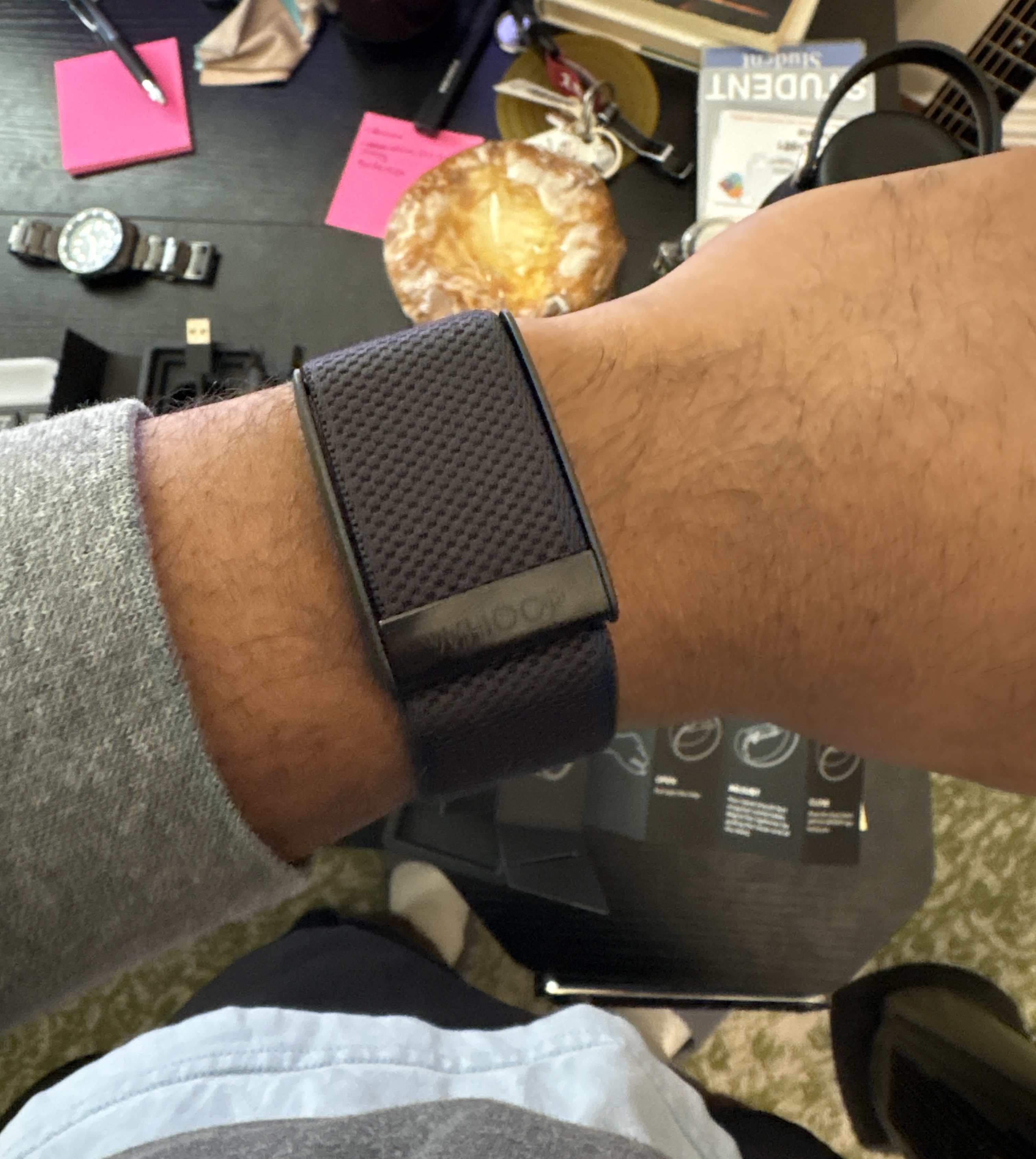
I purchased the WHOOP fitness band in March of 2025 after about a year of research and asking around about the product. The fact that it was not a smartphone on my wrist that could further inundate me with notifications and messages, but rather a device designed solely to generate personalized health insights, was extremely intriguing to me. I saw the WHOOP band as a product that could supercharge my fitness journey and get me into tip-top shape as efficiently as possible (my friends jokingly called me WHOOP Man, Mr. WHOOP…you get the gist). I suspected it would offer me health insights that would reveal something I could be doing differently and/or better, whether that meant spending more time doing zone 2 cardio or upping my strength training from 3 to 5 times per week.
Despite understanding the benefits of WHOOP, I did not renew my annual membership this past March (at the time of this writing, the platform costs roughly $149-$359 per year). The main reason is that I realized that the numerous insights it provided weren’t actually useful. Specifically, the unique capabilities of wearables — generating personalized health data to make the biggest impact on one’s health — have not driven the long-term behavior changes I thought they might.
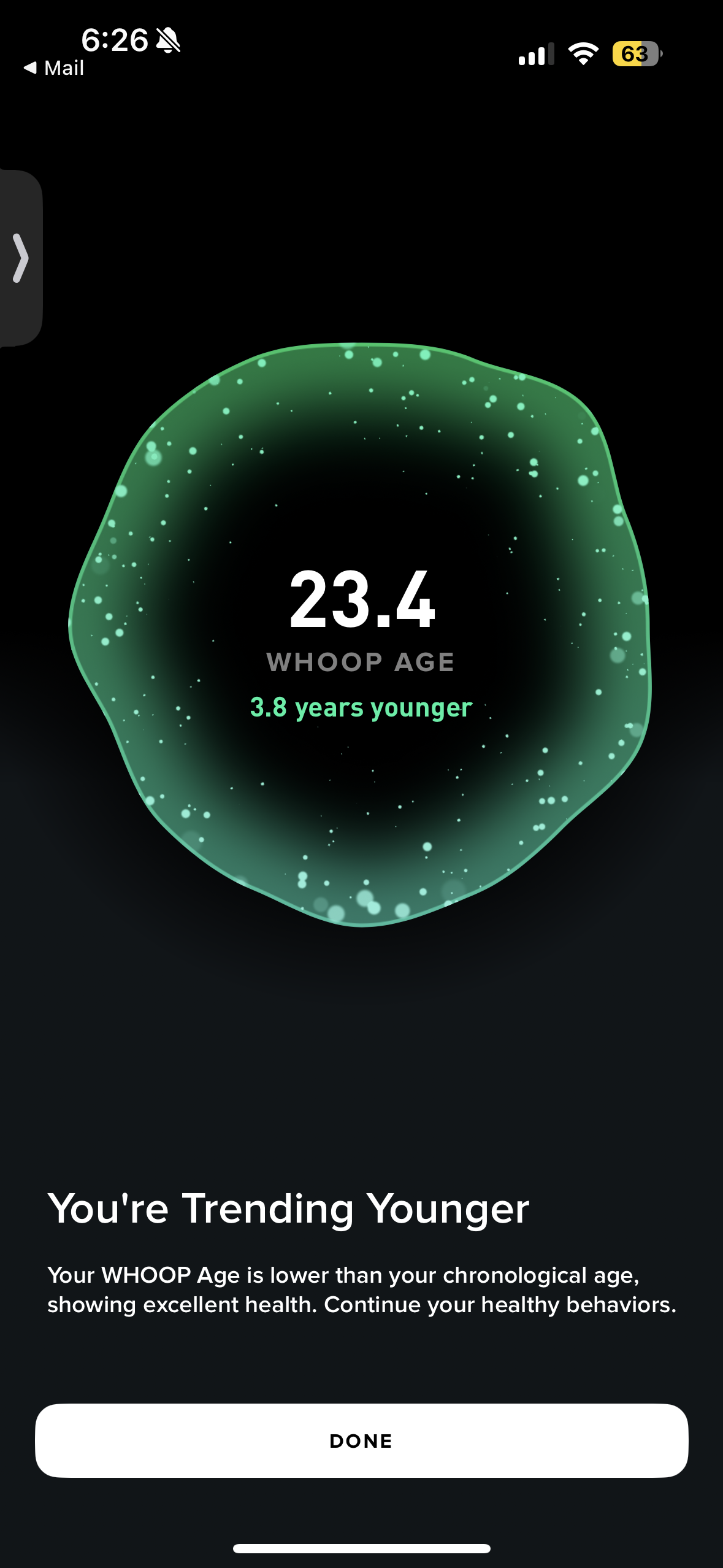
Initially, having data that was specific to my body, e.g., heart rate variability, heart-rate zones, VO2 max, “WHOOP age”, was exciting. It felt like I was unlocking insights that would help me efficiently achieve some amorphous metric of “fitness.” Having this information at my disposal and reviewing it day in and day out really felt like I was doing something positive for my health. However, I noticed that this information meant less and less to me over time. My Recovery Score or Daily Strain were useful at first, but how exactly was I supposed to interpret these numbers? Were they telling me something I didn’t already know? I generally knew when I had a hard run or a poor night's sleep; did I really need my wearable to corroborate this? If not, then what did I need the device for? Slowly but surely, I stopped paying attention to the data being generated and began to question why I was wearing it.
As I reflect, I can’t recall a time when seeing one of the dozen post-workout data insights truly changed my running plan or my approach to the next lift. By and large, things I already knew were guiding my decision-making and planning. Specifically, the AHA recommendation to get 150 minutes of moderate-intensity cardio, the principle of progressive overload for strength training, and eating my fruits and veggies like my mama told me as a kid. Getting to a place where I’m more or less consistent with these principles has yielded more benefits for me than knowing my heart rate variability. As someone who prioritizes physical activity amid a busy schedule, a typical week consists of three runs and two strength training sessions. This setup aligns with my long-term goals: maintaining a healthy blood pressure, keeping my blood sugar levels in check, and maintaining enough strength to play sports and perform daily activities with minimal discomfort. These are goals that I think most people also have. I’m not a world-class athlete, and I don't regularly compete in high-intensity events like marathons or Ironmans. If I were a betting man, I would wager that most people who stumble across my blog might fit that same description. For us normies, there might be a short-term gain from using a wearable, but I am just not convinced that those gains persist in the long term.
On top of that, what started as curiosity and a drive to be physically healthier quietly began to shift to a mentally unhealthy line of thinking. A small part of me became constantly worried about what my wearable might show on a given day. I feared I might be missing a data point that the WHOOP could provide that could help me achieve my health goals (some of which were conveniently a part of the premium subscription package). Or I would worry that I was engaging in behaviors that were bad for my health, and I could only know that through my wearable.
I wasn’t alone in that experience. A New York Times article published in May 2025 examined the mental health impacts of copious amounts of personalized health data. It is becoming clear that a huge part of the wearable experience for many is constantly worrying about health in a way that is ultimately unhealthy. There may be a sense of disappointment when your sleep score is in the red, or you haven’t “closed your rings” that day. This anxiety and reflexive “hyper-optimization” is increasingly being recognized as counterproductive towards the goal of being healthier. The insights from my WHOOP were certainly fascinating, but I reached a point where I was likely better off without them.
You might be thinking to yourself, “Well, Jameson, that’s on you for thinking this one thing would lead to an outsized impact on your day-to-day experience”. And to that I would say: you’re right! That’s exactly my point. The truth is that more information is not intrinsically better, especially when it comes to health. In fact, I would argue that whether more health information is useful has less to do with the information’s quality and more to do with the context in which the individual lives. One way I know this is true is through research I published in 2024. I interviewed people living with sickle cell disease to see whether they would willingly participate in a study in which they would be told if their DNA contained mutations that are associated with worse health. What came out of that work was the messy truth that more information is not always better and context matters. Some people I interviewed felt that they would want to know because knowing would allow them to take action and prevent long-term health consequences. Others I interviewed said they would not want to know because they believed that more information was less likely to meaningfully change how they manage their existing condition(s) and overall health. In other words, the utility of having more personalized health information at your disposal varied from person to person, with many seeing it as less valuable in the long run. In an effort not to make false equivalencies, I must state that the information we get from analyzing DNA differs from that of a fitness wearable, with much different levels of clinical significance. I do believe, however, that these different types of data exist within the same realm of personalized health data, which is one piece of a much larger health and wellness puzzle.
To be sure, many wearables demonstrate potentially meaningful functions: for example, detecting cardiac arrhythmias with impressive sensitivity and specificity, and flagging increased respiratory rates during the early stages of COVID infection. The incidence of conditions that wearables can detect, such as atrial fibrillation, hovers in the low single digits and these wearables offer a new modality for early detection of a narrow set of diseases. However, I think these benefits must be considered in light of the larger landscape of health and wellness culture as it stands today. The ever-changing health and wellness ecosystem is chock-full of companies that want to capitalize on and monetize health data — with some “empowering” people to optimize family planning (read: eugenics soft launch) — aided by the promise of improved health. Suffice to say, the ways our health information is being sliced, diced, and repackaged by these companies are myriad, and I think it’s still too early to conclude whether these innovations will contribute to improved health outcomes at a population level.
So, where does this leave us? I’m left believing that more personalized health data does not inherently guarantee better health outcomes. The more I think and read about the wearables question, the clearer it appears that individual context and specific health goals are the most important variables in one’s wellness journey. If you’re like me, curious and interested in the idea of becoming healthier through a data-driven approach, then maybe a wearable can be useful for you. But take a beat to ask yourself: Is the data a wearable provides going to get me to do the things I already know are good for me? Will it get me to eat more fruits and vegetables? Is it going to help me put my phone down before bed to get better sleep? And how might being inundated with more personal health data than you’ve ever seen before impact your mental health? These are just a few of the questions that I think are useful to ask yourself if you’re considering a wearable. It’s hard to change what you cannot measure, but it’s also hard to know which measurements matter most to you when you’ve got more than a dozen relatively useless metrics at your disposal. On top of that, there is a real chance that these metrics become background noise in time. If you’re working towards a consistent fitness routine that aligns with your goals, then I’d say you’re already moving the needle.
-kjf


